 UNMUL RECORDS CENTER
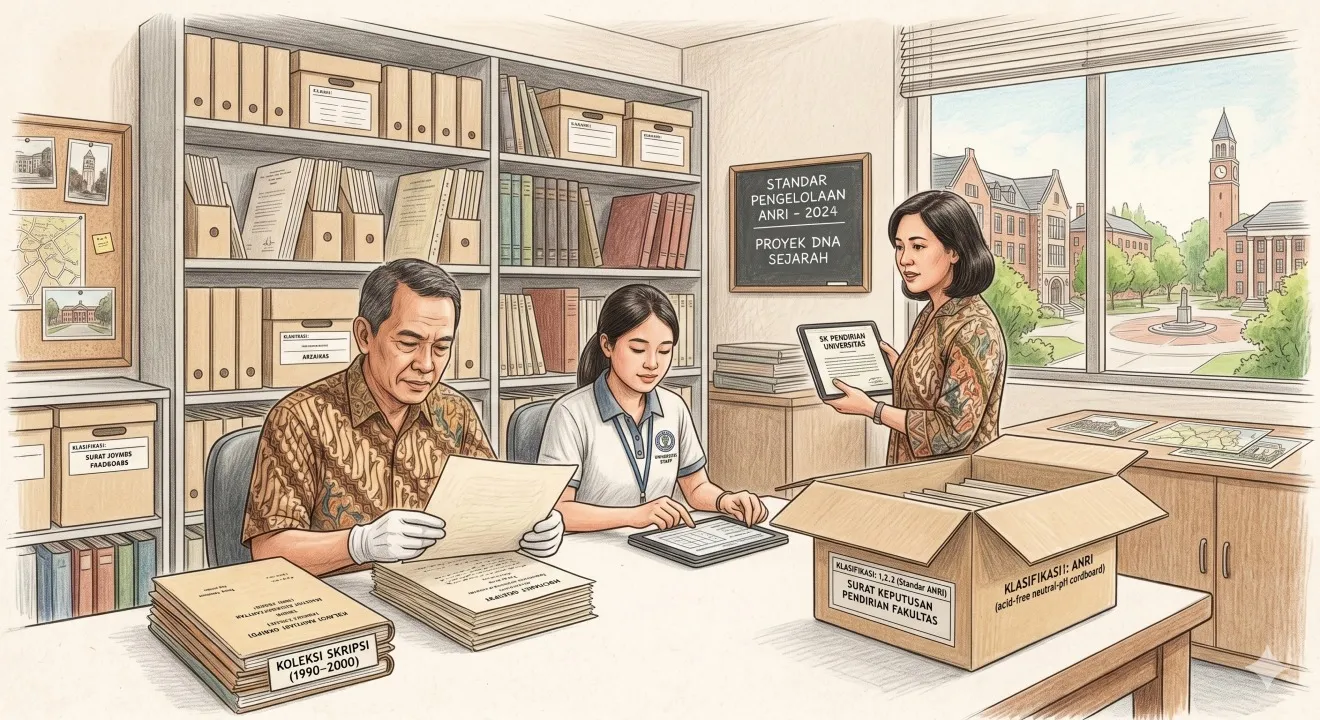
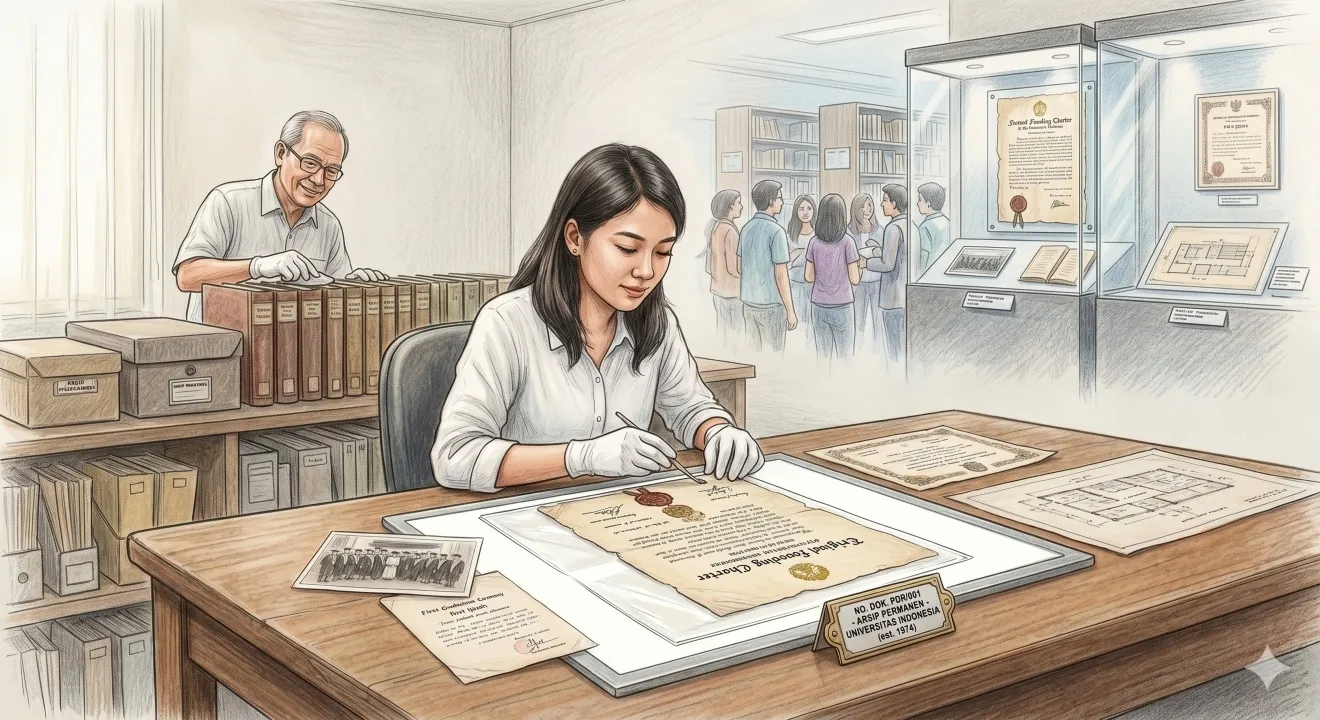
Ever wondered what would happen if a student's thesis from ten years ago was lost, or a decree establishing a study program was suddenly tucked away somewhere? In the campus world, archives are not just a pile of dusty papers in the basement, but the "DNA" of the history and credibility of the university itself.
To ensure that records management at public universities (PTN) stays organized and complies with ANRI (National Archives of the Republic of Indonesia) standards, there are several basic steps we need to understand. Let’s break it down in a more engaging way!
Many people think that working in the archives department is boring. In reality, managing archives is like being a “guardian of time.” At PTNs, archives serve as authentic evidence of every academic achievement. To prevent this from becoming a burden, ANRI has a secret formula known as the Four Basic Instruments of Records Management.
What are they? Let’s break them down one by one:
1. Know Its “Home” (Official Document Format)
Before records are stored, we must know how to create them. Official Document Formatting Guidelines are the rules governing how official university letters are drafted—from the logo and font type to the layout of signatures.
Why is this important? So that all letters from any faculty have the same (uniform) appearance. This strengthens the university’s identity and makes it look professional.
2. Have a Clear “Address” (Archival Classification)
Imagine a library without book categories; it would be a mess, right? The same goes for archives. Archive classification is a system of grouping based on function or subject.
Simple Tip: Don’t mix financial matters with curriculum matters. With the right classification codes, finding a single letter among millions of files takes just a few seconds.
3. Know When to “Let Go” (Record Retention Schedule / RRS)
Not all paper needs to be kept forever. There comes a time when a document is no longer “useful.” The ARR is a guide for when a record can be destroyed, moved to storage, or permanently archived at the National Archives.
The result: Campus storage facilities won’t be crammed with papers that could have been destroyed five years ago.
4. Who’s Allowed to Look? (Security & Access Classification System)
Some campus records are public (such as graduation announcements), while others are highly confidential (such as employee disciplinary investigation files).
The rule: We must determine who has access rights. We must not allow student or faculty personal data to leak due to careless access management.
Digital Transformation: The Secret Weapon Called Srikandi
Well, all the basics above are now summarized in one powerful application: Srikandi. ANRI created this application so we no longer have to worry about memorizing classification codes manually. Everything is automated, integrated, and secure.
Conclusion: Well-Organized Archives, Maintained Accreditation
For the academic community at public universities, proper archiving isn’t just about keeping desks tidy. It’s about safeguarding intellectual assets. Remember, one of the key criteria in accreditation evaluations is the completeness of documents. So, if your archives are organized according to ANRI standards, the path to Excellent Accreditation will definitely be smoother!